Drywood termite spot treatment serves as an immediate, isolated control measure for structural wood that avoids the heavy disruption of structural fumigation. In suburban communities like Panther Trace, Rivercrest, and…
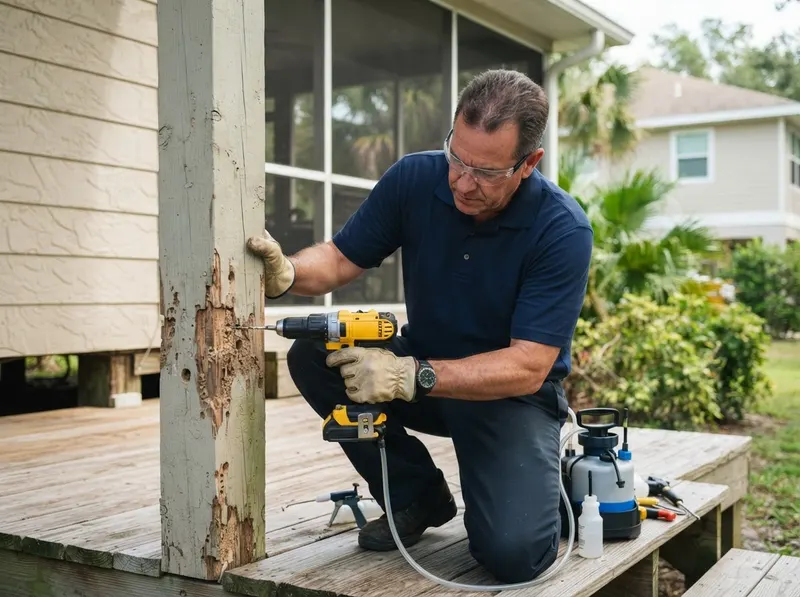
Drywood termite spot treatment serves as an immediate, isolated control measure for structural wood that avoids the heavy disruption of structural fumigation. In suburban communities like Panther Trace, Rivercrest, and Summerfield Village, southern drywood termites (*Cryptotermes cavifrons*) enter attics, soffits, and garage framing through ambient humidity drafts and exterior utility penetrations. Unlike subterranean species, drywood colonies live entirely inside the wood they consume and require no soil contact. If an infestation is localized to 1 or 2 framing members, such as a single fascia board, a window frame, or a truss plate, direct gallery injection stops the reproductive cycle immediately without displacing your pets, children, or groceries for days. The trade-off involves geographic scope: spot treatments eliminate termites in identified, reachable galleries, but they do not protect untreated structural timbers hidden behind drywall if colonies have spread throughout the building.
Rapid suburban expansion across Hillsborough County often pushes termite swarms out of native oak hammocks along the Alafia River Basin into newly developed tracts such as FishHawk Ranch, Triple Creek, and South Fork. Structural settlement and high ambient temperatures around the Balm-Boyette Scrub Preserve accelerate localized attic dryness, providing optimal nesting moisture for drywood alates between May and October. A standard spot application uses a 1/8-inch drill penetration to access the core void of the board, followed by the delivery of a non-repellent transfer chemical or aerosolized borate under 20 to 30 PSI of pressure. This material coats the inner walls of the feeding tunnels, ensuring that grooming termites transfer the active ingredient directly to the queen and developing nymphs.
Property owners evaluating remediation options must distinguish between subterranean soil defense and localized drywood treatment. For older ranch residences in Boyette Springs or riverfront dwellings in Alafia River Estates, subterranean species require perimeter ground barriers, whereas drywoods require direct physical injection into above-ground wood members. If active kick-out holes display mounds of dry, hexagonal fecal pellets on garage concrete or interior windowsills, a localized spot application addresses the point of entry before colonies hollow out load-bearing timber. On-site assessments confirm accessible gallery boundaries before application begins, establishing a clear treatment zone without forcing homeowners into expensive ongoing monthly service packages.
Every job gets a firm, written price after a free on-site visit.
Tell us about your drywood termite spot treatment job in Riverview and we'll send a clear, written quote, usually the same day.
 Suncoast Heron Pest Control